Flat Split on the Floor but Not in the Air - What Gives?
Are you working on flatter, split-ier legs in your inversions? Being able to nail a flat split in a handstand, dangling from the top bar of a lyra, or virtually any instance where your body is upside down is a major active flexibility challenge!
Unlike a regular ol’ split on the floor, where we have the helpful force of gravity literally helping push us into a flat front split, in an aerial split we need to use our leg muscles to pull our legs into this position. If you think of the muscles involved in a front split, this means we need strong hip flexors and glutes to pull our legs into a split-ier split:


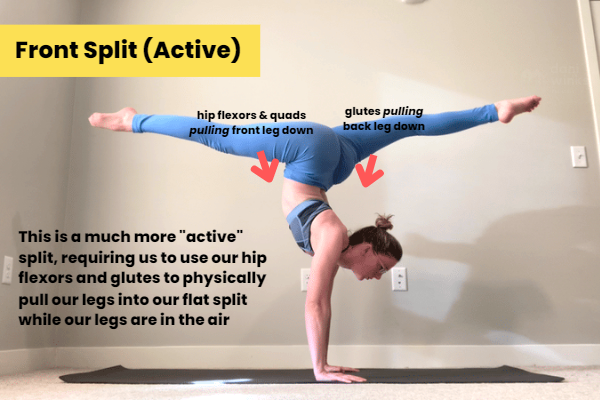
So to help get our active/aerial splits flatter, we need to train the bejezus out of our active flexibility for the muscles that are in a shortened position in our front split.
Lucky for you I’ve got a couple of recommended exercises!
Active Drills for Flatter Aerial Splits

1. Standing Split Kicks
Strengthening focus: Glutes (back leg)
Stretching focus: Hip flexors (back leg), hamstrings (front leg)

2. Rounded Back Leg Extensions
Strengthening focus: Glutes (back leg)
Stretching focus: Hip flexors (back leg)

3. Arched Back Pike Leg Lifts
Strengthening focus: Hip flexors (front leg)
Stretching focus: Hamstrings (front leg)

4. Arched Back Supine Leg Lifts
Strengthening focus: Hip flexors (front leg)
Stretching focus: Hamstrings (front leg)

5. Arched Back Supine Leg Straightens
Strengthening focus: Hip flexors (front leg), quads (front leg)
Stretching focus: Hamstrings (front leg)
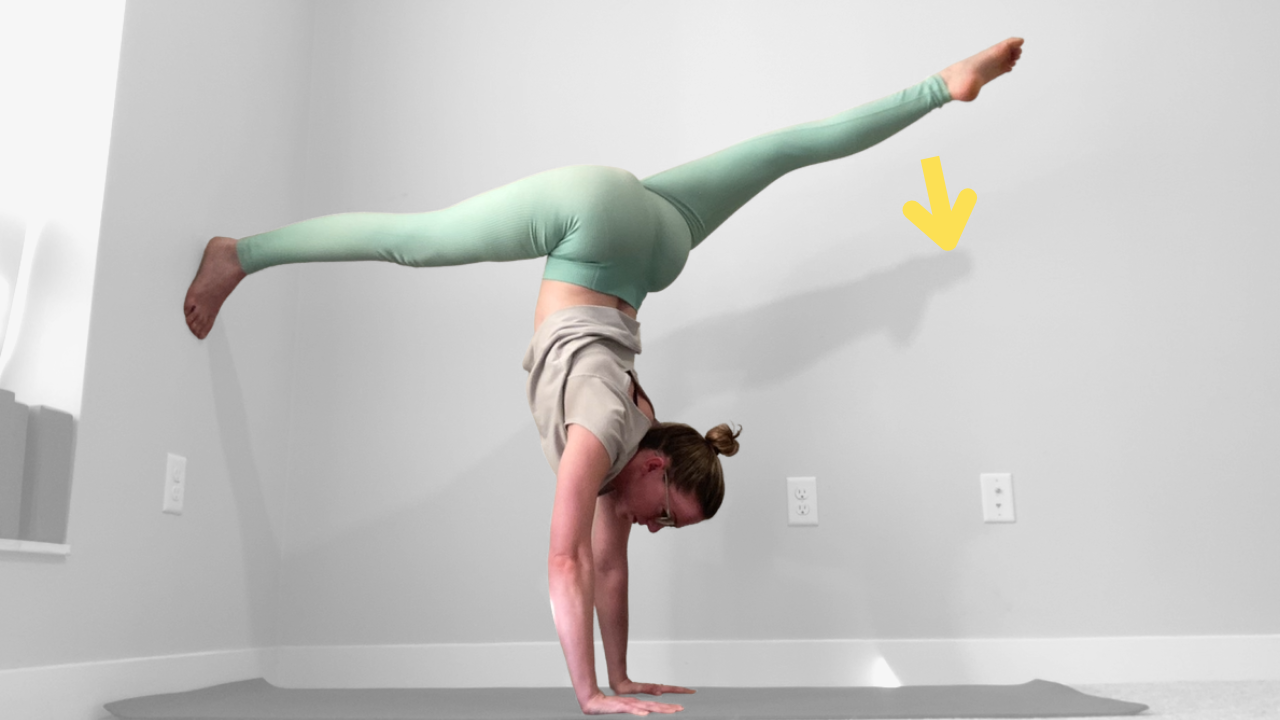
6. Wall Split Handstand Back Leg Pulses
Strengthening focus: Glutes (back leg)
Stretching focus: Hip flexors (back leg), hamstrings (front leg)

7. Wall Split Handstand Front Leg Pulses
Strengthening focus: Hip flexors (front leg)
Stretching focus: Hamstrings (front leg)
And Keep Working on Your Oversplits!
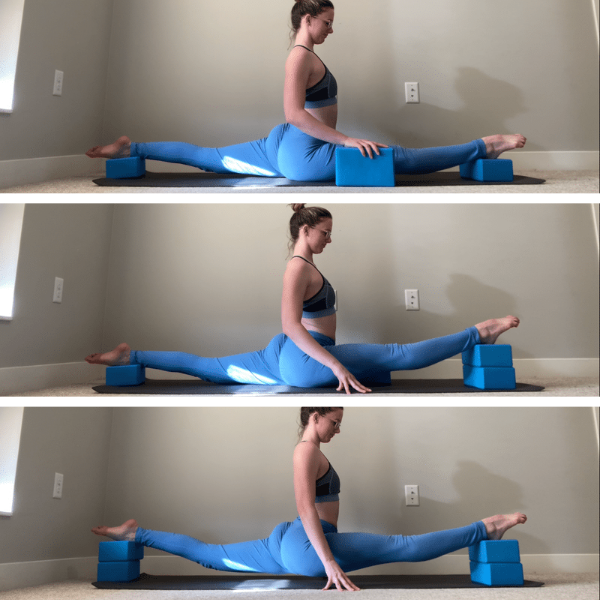
Passive stretching belongs in your training routine too! Ultimately our active flexibility will only ever be a smaller portion of the range we can achieve passively, so continuing to increase your passive range of motion for your splits by training oversplits will help too.
The split-ier you can get your oversplits, the less tightness/resistance your hip flexors and glutes will have to fight against to pull your legs into a spitier spilt in the air.
Related Content
Recommended Workshop Recordings
Who this workshop recording is for:
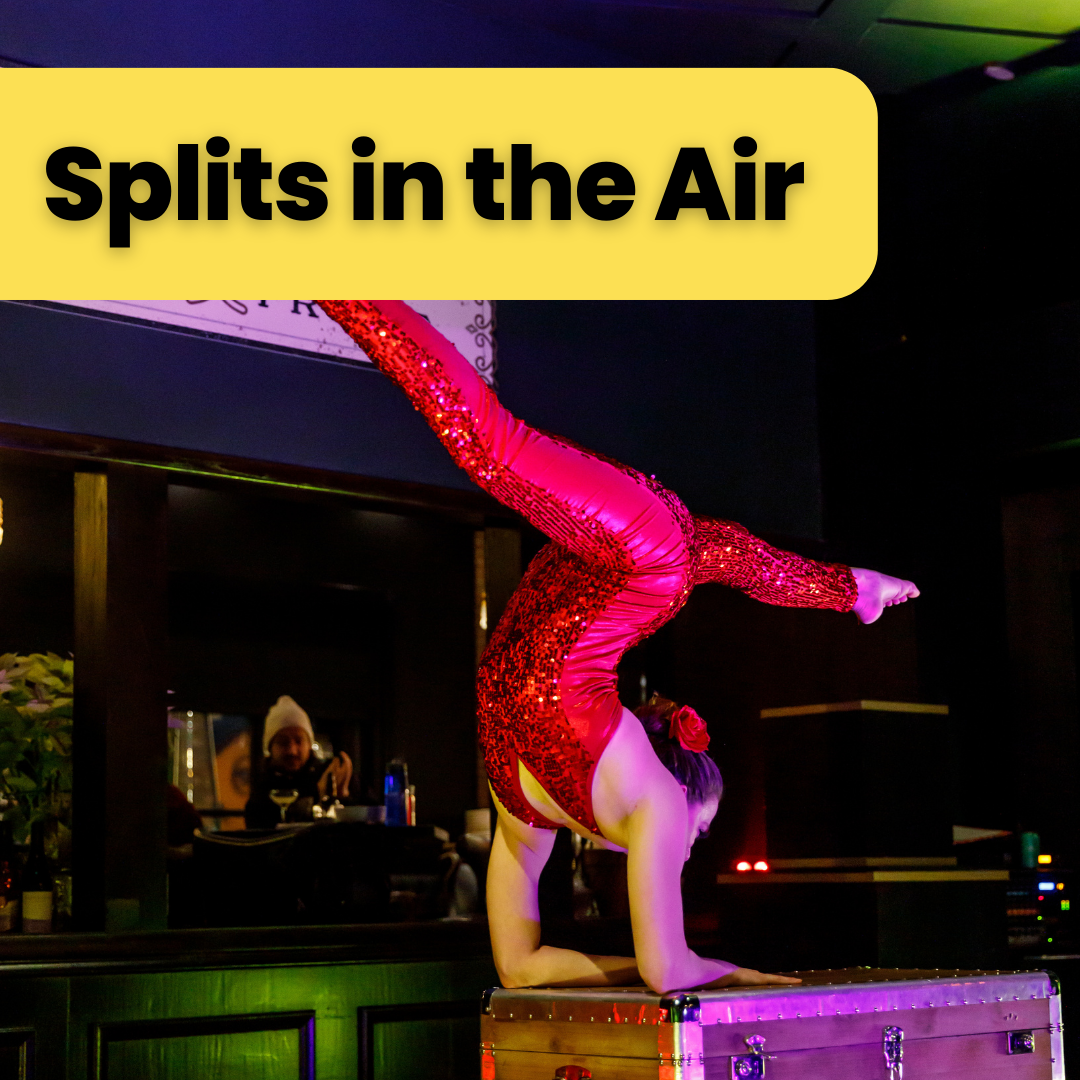
If you’re someone who is struggling to get flat front splits in the air, whether that’s trying to get nice lines in a split-y handstand or forearm stand, or you’re trying to nail some funky pole splits - this workshop is for you! The biggest challenge with doing splits in the air vs. regular ol’ splits on the ground, is unlike our floor splits where we have gravity helping us slide into the stretch and open our legs, when we do splits in the air, we need our leg muscles to do the work to open our legs (which could be lifting them against the resistance of gravity, or against the resistance of tight muscles).
Suggested Prerequisites:
Flat splits are not required for this workshop (although flat splits and/or oversplits do help!). But due to the challenge of some of the drills, it’s recommended that students are relatively close to flat in their front splits (hips 6 inches or closer to the floor).
If your splits aren’t that close to flat yet, I’d suggest you start with the 45-minute Starting Front Splits workshop instead.
Students must be comfortable doing some sort of inversion you can do a split in (plow pose is the inversion we’ll be using at the end of this follow along).
This 60-minute, follow-along workshop covers:
A thorough warm up to prepare hips for deeper front split work
Sciatic nerve mobilizations to ensure our nerves are slide-y and glide-y and ready to help us stretch
Active flexibility exercises to strengthen and stretch the main muscle groups that help with opening the legs into wider front splits when inverted in the air (with an emphasis on hip flexor, quad, glute, and hamstring strength)
This is NOT a workshop on how to do handstands, forearm stands, or other fancy inversions (although I do have a workshop for that) - this workshop assumes students already have some sort of skill practice where they use upside-down splits (ex. handbalancing or pole) and can take the flexibility and engagement learnings from this workshop and apply it to the skills they are already familiar with.
Required props:
2 yoga blocks
Bit of wall space
OPTIONAL: Stretchy resistance bands (for a couple of the exercises I demo options to make them more challenging with a mini loop style resistance band and a long stretchy superband style resistance band - but the exercises can still be performed without the bands if needed!)
Upon checkout, you will receive a PDF with a link to the workshop recording (Squarespace limits file upload sizes so I can’t actually upload the whole recording here). The recording is for your personal use only, not to be shared with others - thank you!

Who this workshop recording is for:
Learn to (safely!) push your limits in this front split focused workshop where we'll be exploring the fundamentals of *oversplits* to deepen our hip flexibility (and strength). Oversplits are a great next step for folks with flat splits, as well as students who are struggling to close the last couple of inches on their splits.
Suggested Prerequisites:
This workshop is recommended for students who already have a flat front split, or are getting close to a flat split (hips 2” or closer to the ground).
This 60-minute, follow-along workshop covers:
A thorough warm up to prepare hips for deeper split work
Active flexibility exercises to strengthen and stretch hip flexors and hamstrings to encourage deeper splits (especially those pesky hip flexors!)
Proper knee alignment and engagement cues to protect knees and avoid hyperextension when working on oversplits
Suggested props:
Yoga blocks (at least 2)
A long strap - it can be stretchy like a Theraband or stiff like a yoga strap. A scarf or even pair of pants can be used as a “strap” if needed
Upon checkout, you will receive a PDF with a link to the workshop recording (Squarespace limits file upload sizes so I can’t actually upload the whole recording here). The recording is for your personal use only, not to be shared with others - thank you!