Help! My Back Hurts After Backbending (Should I Be Worried?)
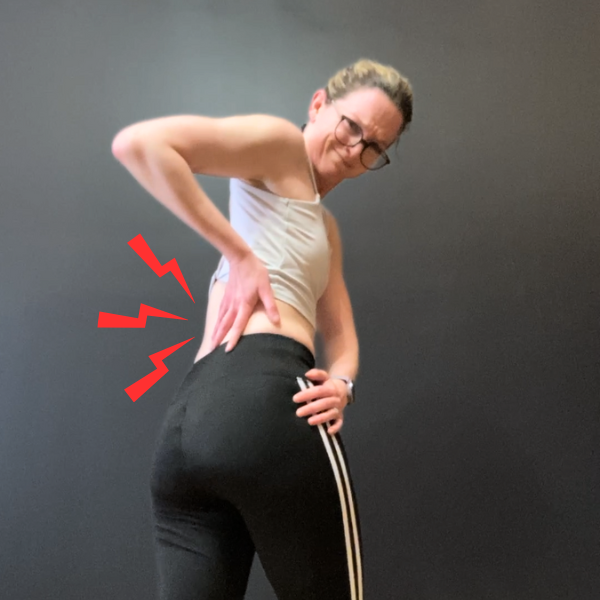
This is a common question I get from students, especially students new to working on back flexibility. It’s not uncommon to get some mild back pain the day after working on backbends, so it’s important to be able to differentiate between “productive” muscle soreness and “red flag” pain indicating improper training technique.
Firstly, a big giant disclaimer: I am not a medical professional and this is not medical advice. If you have chronic back pain, pain that’s lingering for multiple days even with rest, you should talk to a doctor or a physical therapist.
Now that that’s out of the way, let’s take a look at the two most common causes of back pain I see in backbending training, and then learn how to differentiate between “OK” pain and “bad” pain:
OK: Muscle Soreness
Just like with any other kind of strength training, if you are including active/strengthening flexibility drills as part of your backbending training (which you should be!), it’s completely normal to experience some muscle soreness 1-2 days after your training session. While the exact mechanism of WHY Delayed Onset Muscle Soreness (DOMS) occurs is uncertain (source), muscle soreness is a very common experience for many athletes after intense or novel training. Typically we like to think of the muscle soreness as a natural side-effect of the tear-and-repair process of our muscles rebuilding themselves to be stronger after exercise.
Most commonly, this manifests as some general soreness and fatigue in the “deep back muscles,” the long tenderloin-y muscles that run alongside each side of our spine, especially in the low back:

These are the main muscles responsible for spinal extension, aka backbending. When they contract, they can pull us into a deeper backbend, like during back extensions. Of course these aren’t the only muscles that can be sore, but they are the ones that usually make students the most “suspicious” of the discomfort since they are so close to the spine.

Generally, a small amount of muscle soreness is actually a good thing! It’s often a sign that we did some challenging training and are making our body stronger! If you don’t get sore, does that mean your workout wasn’t effective? Not necessarily! But that’s another topic for another blog post…
Not OK: Joint Pain
Unlike muscle soreness, which is felt in the “meaty” parts of our muscles, joint pain is pain that’s felt between the bones of a joint - for our back, that typically manifests as pain in/between the vertebra of our spine itself. This is generally a sign that you are training your spine under too much pressure, relying too much on your connective tissue and not enough on your muscles to support (and lessen the intensity of) the backbend. This is common among students who tend to “dump” backbends into their low back, without using their abdominal muscles to moderate the intensity of the backbend. I also see this quite a bit in students who place too much pressure on their neck in chin/chest stands without building up the prerequisite strength/flexibility to support the pose.

While a bit of joint soreness doesn’t necessarily indicate something serious (like an injury), it should be treated as a “red flag” - a warning sign from your body that you are pushing yourself too deep without the proper muscle support, and continued training like this could lead to injury. Next time you train, try to focus on the supporting muscle engagement, and dial back the intensity/depth of your backbend shapes. If you’re still getting a sore back the next day, then it might be time to work with a coach to make sure you’re training safely!
Also Not OK: Tingling/Numbness
While this isn’t exactly a pain symptom, and is thankfully uncommon, it is worth mentioning in this post. Any type of tingling in the extremities, numbness, or lightheadedness are all “red flag” symptoms that you’re pushing too hard, and likely doing something wonky to your nerves. If you are getting any nerve-y symptoms during your training, back off. If you are experiencing tingling or numbness for more than 12 hours after your training, seek out a medical professional.
How to Differentiate the “OK” from the “Not OK” Pain Sensations
Here are some of the questions you can ask yourself when trying to understand if the pain you’re feeling after training is “red flag” (definitely not OK), “orange flag” (maybe OK, maybe not), or “green flag” (totally fine).
Timing:
During your training: red flag. This one should be a no brainer, but sometimes we get too caught up in trying to do the “cool” thing we push through pain without really realizing it. As a reminder, stretching should never hurt. If you are getting low back or neck pain in a pose or in a drill, double-check your form, try a smaller range of motion, or take a break.
Right after your training: red flag. Even if you worked your ass off, muscle soreness generally doesn’t set in immediately after a workout, so if you are getting some back pain within hours of training, odds are you overdid it and need to take it easier next time.
1-2 days after training: orange flag. This could be regular ol’ muscle soreness, or more suspicious joint pain - keep evaluating
Location:
In the muscle-y bits 1-2 inches to the side of your spine: orange flag. Probably muscle soreness, and not something to really worry about unless the pain is particularly sharp, or lasts more than a couple of days.
On your spine: red flag. This is that “you probably pushed too hard in an unsupported position” scenario we talked about earlier. Dial it back next time!
Intensity/Sensations:
Diffuse, spread out soreness: orange flag. If you’re feeling diffuse soreness in your muscles for a day or two, you probably don’t have to worry
Sharp, localized pain: red flag. Sharp pain, even if it’s in the meaty part of a muscle, could indicate an injury (or “pre injury” in the case of pain that goes away after 1-2 days). It’s a sign you need to modify your training
Tingling/numb: red flag. Any tingling is a red flag you need to modify your training. Tingling/numbness that persists after training should be evaluated by a medical professional
Duration:
1-2 days: orange flag. For muscle soreness, 1-2 days is the typical duration we expect to feel sore for, and training adjustments aren’t likely needed. But for joint or acute pain, just because the pain gets better in 1-2 days does not automatically mean that you can/should keep training the same - always seek to minimize any next-day joint or localized pain.
2-5 days: orange flag. If your muscles are sore for multiple days after training, that’s a sign that you likely pushed too hard and need to lessen the intensity next time (even I’m guilty of having been too enthusiastic and giving myself DOMS for 5 days…)
5+ days: red flag. Any pain, even if it seems like a minor niggle, that persists for more than a week really should be evaluated by a medical professional like a physical therapist
Did you notice that that I didn’t list any “green flags?” That’s because there isn’t any type of pain that is automatically “OK” when it comes to training! There are always combinations of factors you should be considering when trying to understand what your body is trying to tell you about how it’s responding to your training. So listen to your body, take rest days as needed, and adjust your training next time. And when in doubt, reach out to a qualified medical professional (and not me, a well-meaning but unqualified internet person).
Related Content
Recommended Recorded Workshop

Who this workshop recording is for:
This workshop is designed for students who have some preexisting back/shoulder flexibility (can push up into a bridge), and are interested in taking it farther. This is a great introduction to contortion-style back flexibility training where you’ll not only learn strengthening drills to deepen your flexibility (because the vast majority of “advanced” flexibility training is really strengthening work!), you’ll learn classic contortion pose variations of bridges.
Suggested Prerequisites:
Students are expected to be able to comfortably hold a bride with straight arms. Crazy backbendiness welcome, but not required. The backbend-y variations included in the tutorials can be modified for varying degrees of back flexibility.
If you can’t yet comfortably hold a bridge with straight arms, I suggest checking out the Building Up to Your Bridge workshop recording instead.
This 90-minute* workshop covers:
An hour long follow-along contortion conditioning class, including
A full body warm up with extra emphasis on back and shoulder mobility
Active flexibility drills to strengthen and stretch your full backbending chain, with dedicated drills for the hips, lower back, upper back, and shoulders
“Choose your own adventure” style skillwork practice: more than 20 minutes of detailed contortion bridge tutorials are included and you can choose which ones to practice during any given training session. Tutorials include…
Review of proper muscle engagement in bridges
Arm and leg variations you can apply to any of your bridge shapes
Straight leg “rainbow” bridges
Spider bridges
Elbow bridges
and more!
This workshop was filmed with the intention of fitting a 75-minute practice, but students may choose to trim it down, or extend it and work on more skillwork for up to a 90-minute practice.
Note: This workshop is also available as part of a 2-workshop “Contortion Bridges” recordings bundle!
Required props:
2 yoga blocks
Long strap (can be elastic or stiff)
Upon checkout, you will receive a PDF with a link to the workshop recording (Squarespace limits file upload sizes so I can’t actually upload the whole recording here). The recording is for your personal use only, not to be shared with others - thank you!