What’s included:
Two 45-minute workshops including warm ups, mobility work, and active and passive stretches to help work towards front splits, straddle pancakes, and middle splits.
Starting Front Splits: Active flexibility exercises focusing on the two main muscles groups needed for square front splits: hamstrings and hip flexors
Starting Middle Splits (& Straddles!): Active flexibility exercises focusing on the two main muscles groups needed for middle splits and straddle pancakes: adductors (inner thighs) and hamstrings (with a healthy dose of glute and hip flexor strengthening for support!)
How is this different from the “Contract-Relax for Splits” Bundle? Both of these bundles include effetive follow-along workshops for the splits, the main difference is the style of training. The “Starting Splits” routines focus more on “rep based” active flexibility exercises (ex. “do 10 leg lifts”) and passive stretch holds of 30-60s. The “Contract-Relax” routines use longer holds of ~90s in a stretch where you alternate contracting, then relaxing the muscles being stretched. Which should you choose? Whichever style of training you prefer! If you like longer holds, go for the contract-relax workshops. But if you like shorter holds and more variety, the “Starting Splits” routines will likely be a better fit.
Who is a good fit for these workshops?
These 45-minute classes are intended for “beginner” to “begintermediate” students whose hips are 4 inches or higher away from the floor when doing the splits.
Even if you have very tight hips and can’t touch your toes (yet!), these videos have stretches and modifications for a variety of levels.
If you are a bendier person, I’d suggest one of these slightly more challenging recordings to work on your front splits or middle splits instead.
Recommended props:
A chair (or a bench or low table)
Yoga blocks - totally optional, but they are a wonderful prop, especially if you’re a beginner. If you don’t have blocks, I recommend practicing next to a chair, your bed, or a wall so you can reach your hand out for balance if you need to
Note: Because of Squarespace’s file size limitations (which is what I use for this wonderful website!), upon purchase you will receive a PDF with a link to the two recordings. You can then stream the recordings online from the private link.
What’s included:
Two 45-minute workshops including warm ups, mobility work, and active and passive stretches to help work towards front splits, straddle pancakes, and middle splits.
Starting Front Splits: Active flexibility exercises focusing on the two main muscles groups needed for square front splits: hamstrings and hip flexors
Starting Middle Splits (& Straddles!): Active flexibility exercises focusing on the two main muscles groups needed for middle splits and straddle pancakes: adductors (inner thighs) and hamstrings (with a healthy dose of glute and hip flexor strengthening for support!)
How is this different from the “Contract-Relax for Splits” Bundle? Both of these bundles include effetive follow-along workshops for the splits, the main difference is the style of training. The “Starting Splits” routines focus more on “rep based” active flexibility exercises (ex. “do 10 leg lifts”) and passive stretch holds of 30-60s. The “Contract-Relax” routines use longer holds of ~90s in a stretch where you alternate contracting, then relaxing the muscles being stretched. Which should you choose? Whichever style of training you prefer! If you like longer holds, go for the contract-relax workshops. But if you like shorter holds and more variety, the “Starting Splits” routines will likely be a better fit.
Who is a good fit for these workshops?
These 45-minute classes are intended for “beginner” to “begintermediate” students whose hips are 4 inches or higher away from the floor when doing the splits.
Even if you have very tight hips and can’t touch your toes (yet!), these videos have stretches and modifications for a variety of levels.
If you are a bendier person, I’d suggest one of these slightly more challenging recordings to work on your front splits or middle splits instead.
Recommended props:
A chair (or a bench or low table)
Yoga blocks - totally optional, but they are a wonderful prop, especially if you’re a beginner. If you don’t have blocks, I recommend practicing next to a chair, your bed, or a wall so you can reach your hand out for balance if you need to
Note: Because of Squarespace’s file size limitations (which is what I use for this wonderful website!), upon purchase you will receive a PDF with a link to the two recordings. You can then stream the recordings online from the private link.
 Image 1 of 7
 Image 2 of 7
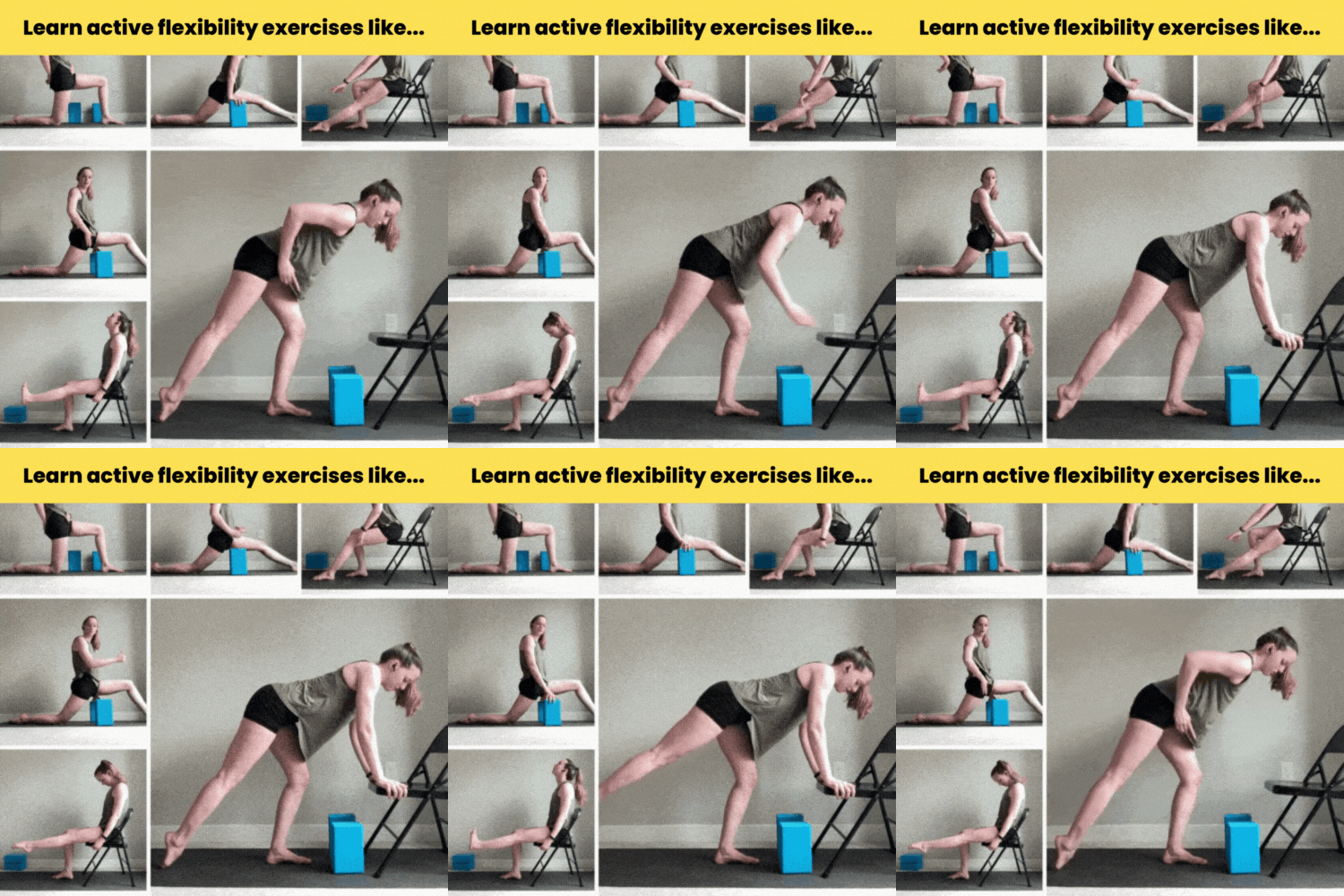 Image 3 of 7
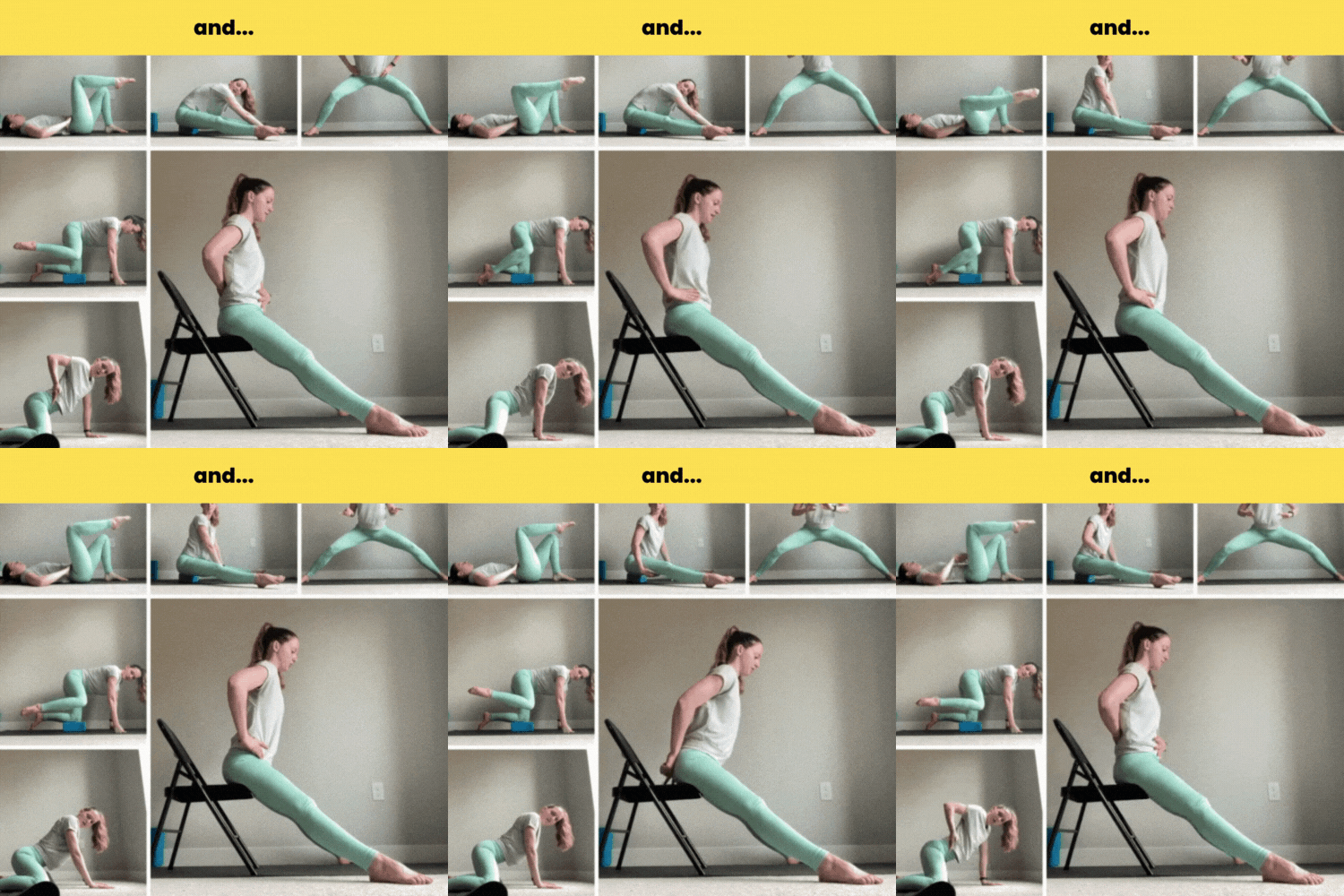 Image 4 of 7
 Image 5 of 7
 Image 6 of 7
 Image 7 of 7